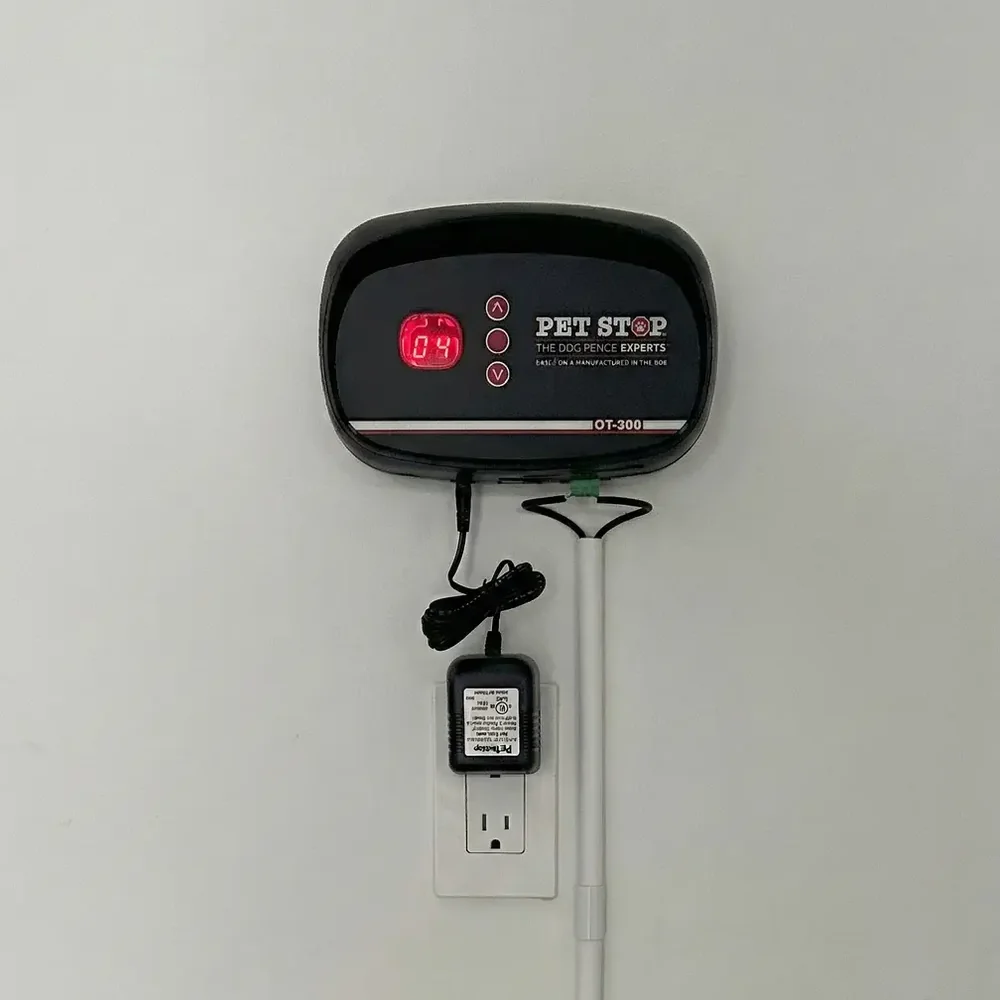
Transmitter
A small box on the wall of your garage or basement. It plugs into a standard outlet and sends a low radio signal through the wire.
In the garage or basement
We bury a boundary wire, fit a light receiver collar, and gently teach your dog where the yard ends.A buried wire, a light receiver collar and gentle training. You may know it as an invisible fence.
Installed packages from $1,945 + HSTMost installations land between $1,800 and $3,500 + HST.Most installations $1,800 to $3,500 + HST.
It’s a deterrent, so your dog will feel it. On install day the collar only beeps. After that, the static correction comes in gradually, starting at a level most dogs barely notice, and only as high as your dog needs.
As your dog nears the buried wire, the collar beeps, so your dog has a chance to turn back.
After day one, it starts at a level most dogs barely notice and only goes as high as your dog needs.
Every turn back at the flags earns treats and praise. Most trained dogs turn back on the beep alone.
“I love my fence and so does Hank. He doesn't like the beeping when he gets a little close to his boundary but that really is all he needs to know he's gone too far.”
Every dog, from 12-week puppies up, starts with just the beep and a treat.
With more than one dog, each collar is set on its own, so a timid dog and a stubborn one can share the yard.
You can feel the correction on your own hand before the collar goes on your dog.
A small box on the wall of your garage or basement. It plugs into a standard outlet and sends a low radio signal through the wire.
In the garage or basement
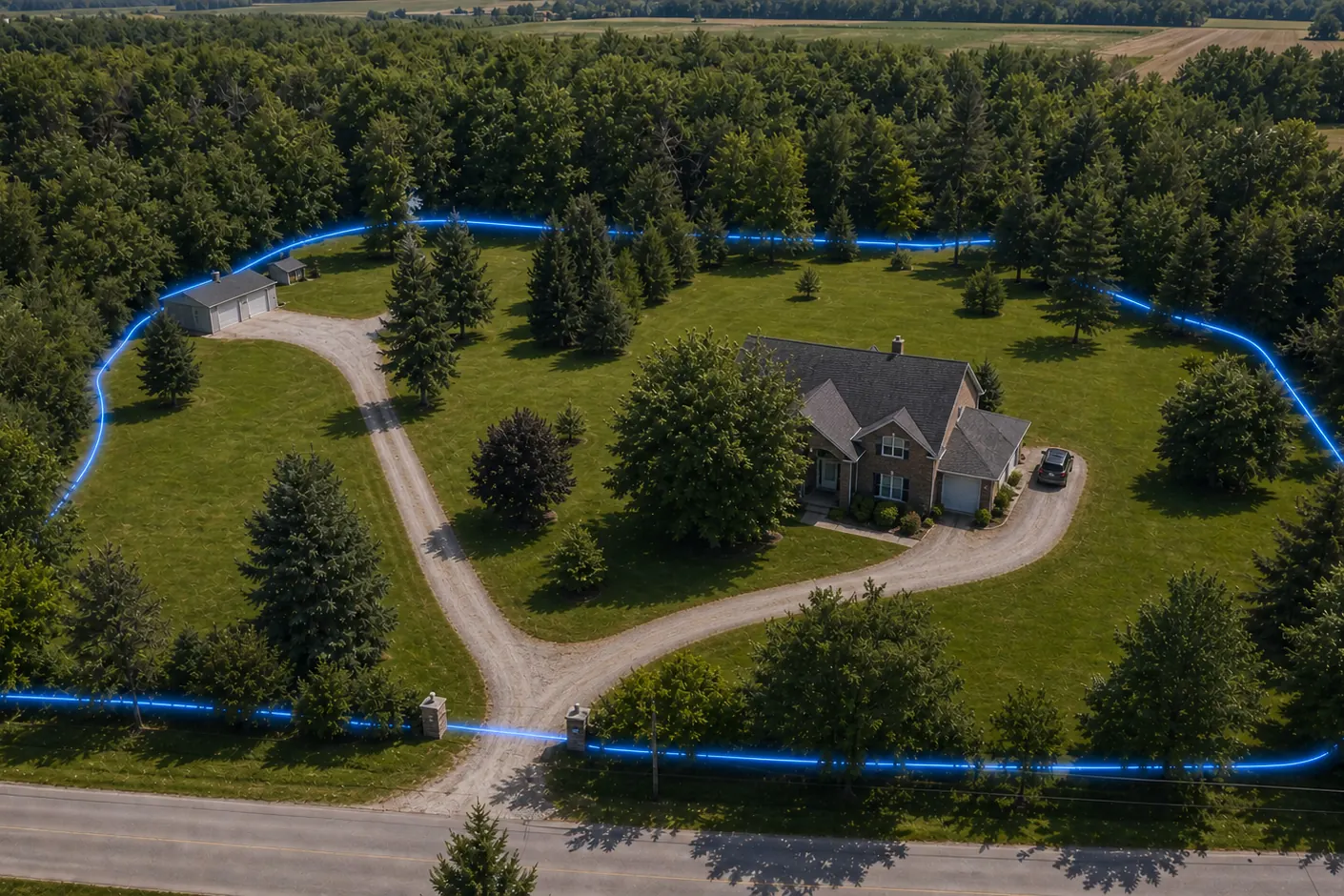
Buried about 5 inches down, around the whole property or just the part you choose. It typically lasts 30 years or more.
About 5 inches down
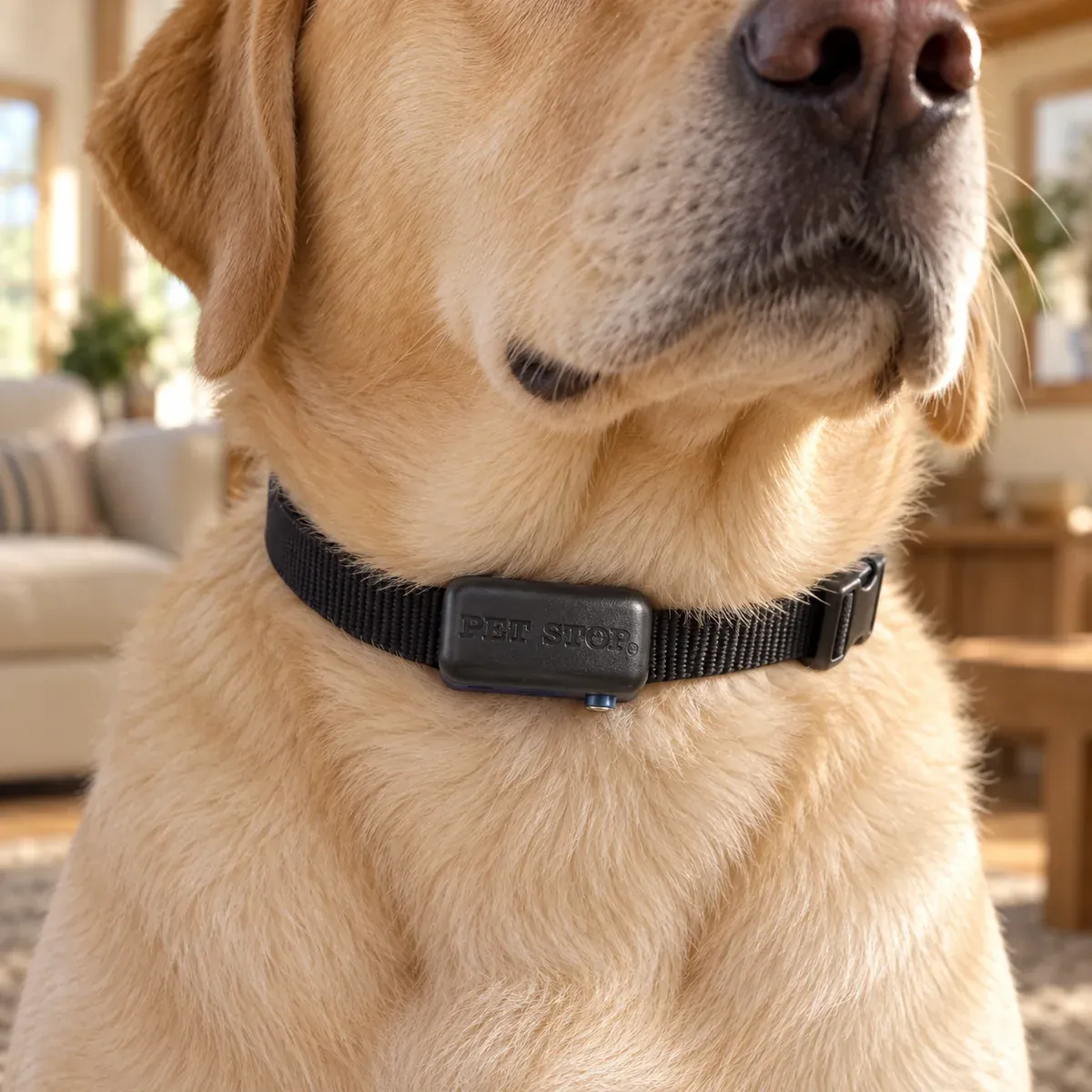
A 1 oz rechargeable receiver that beeps as your dog nears the wire. One charge lasts about four weeks, and it can go swimming.
1 oz, rechargeable
We install Pet Stop® equipment only. Compare the three packages
There’s nothing for you to prepare. We plan the layout with you, either over the phone from a satellite view of your property or in person, and take care of the rest.
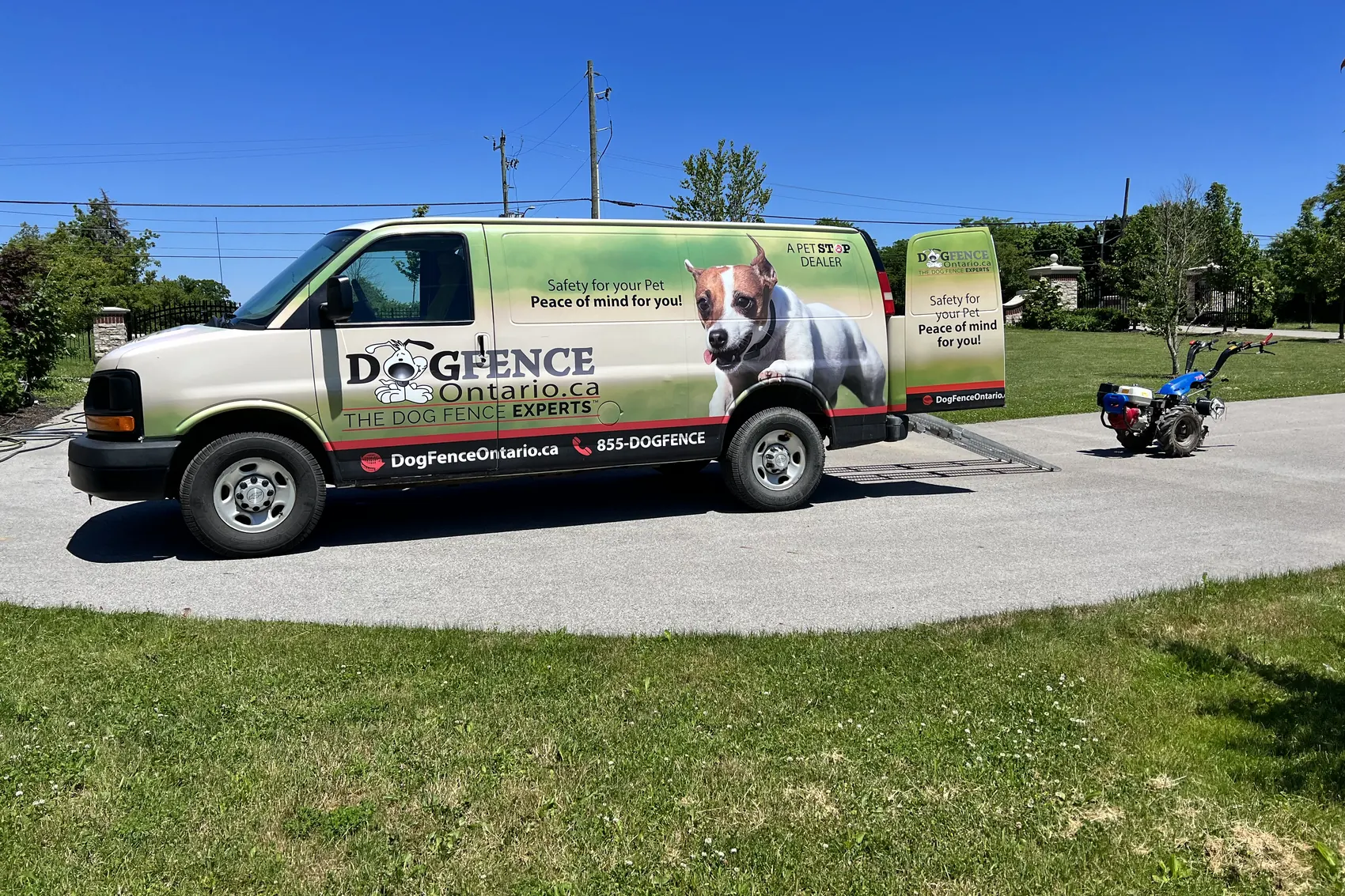
We go over the layout we drew from the satellite view, agree where the wire will run, and ask about anything buried.
“Cameron showed up on the installation date, walked the property with us and explained everything again.”nick rahimian, Google review
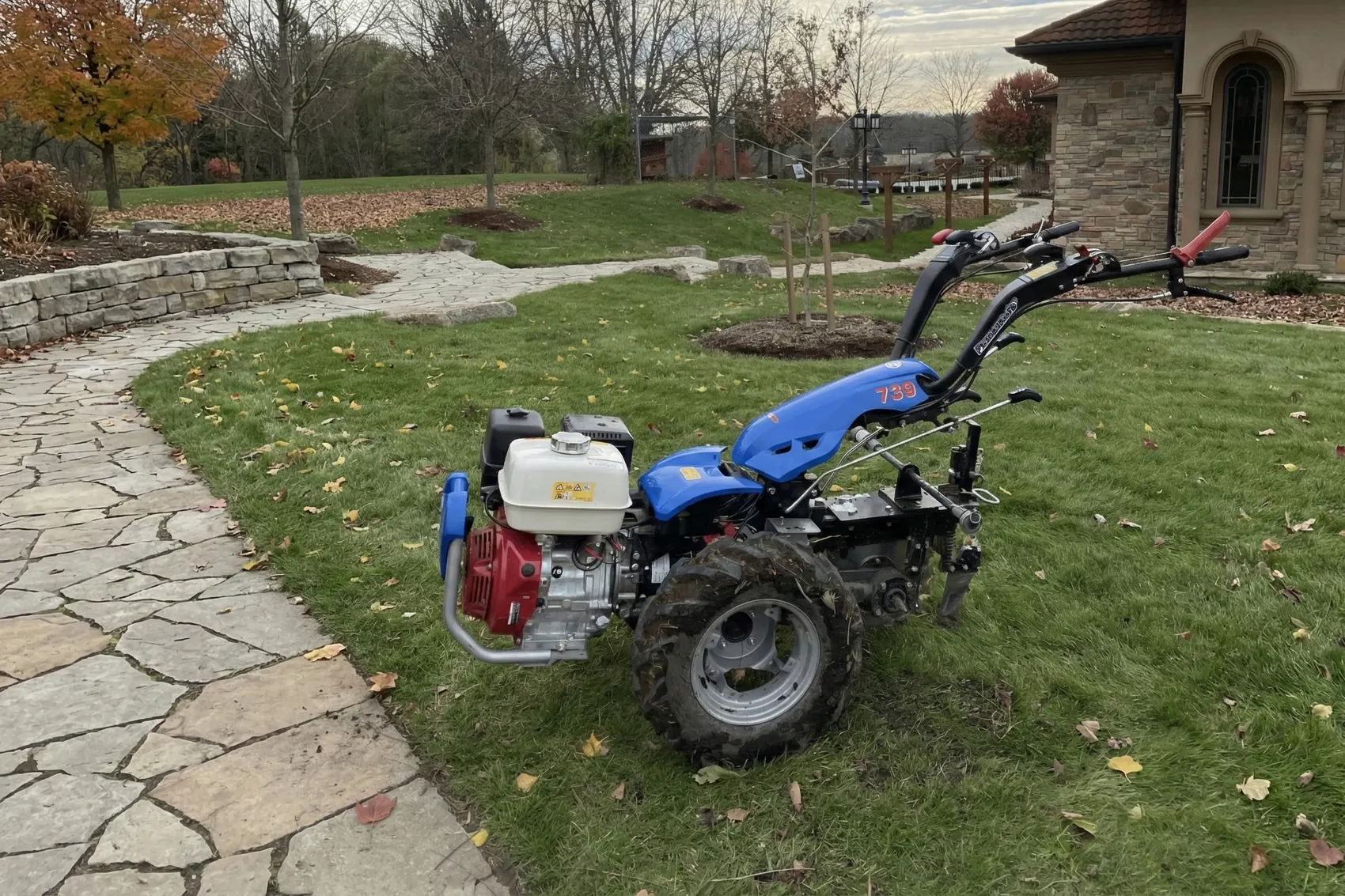
The trencher cuts a narrow slit about 5 inches deep and closes it behind itself. Within a week or two you won’t see where it went.
Before we dig, we trace any garden lights, fibre lines and sprinkler systems so we know exactly where they run, and work carefully around them. We go under gravel driveways and cross asphalt or concrete at a seam or a shallow sealed cut.
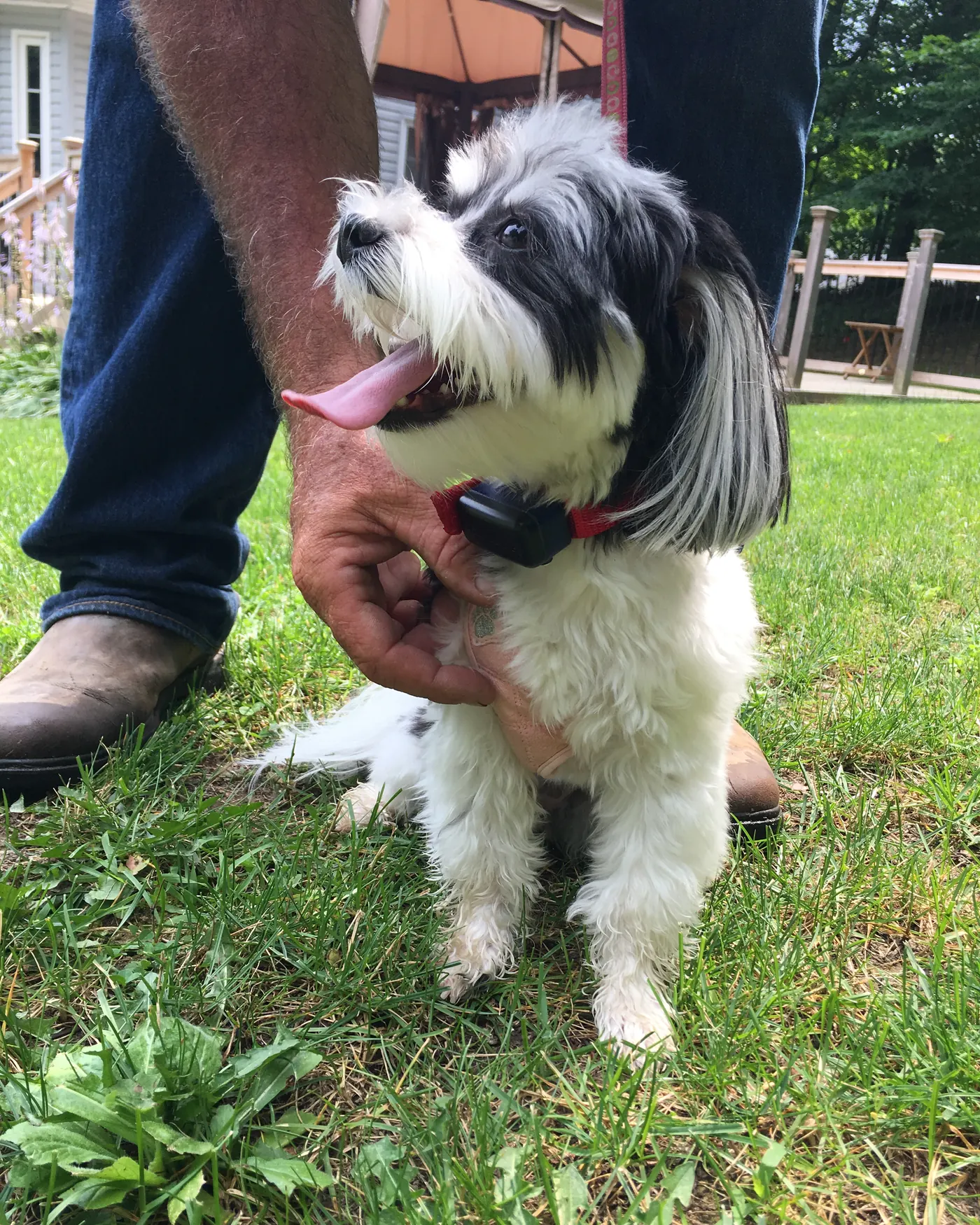
The transmitter goes on a wall in your garage or basement, beside a standard outlet. Then we fit the receiver collar and set it for your dog.
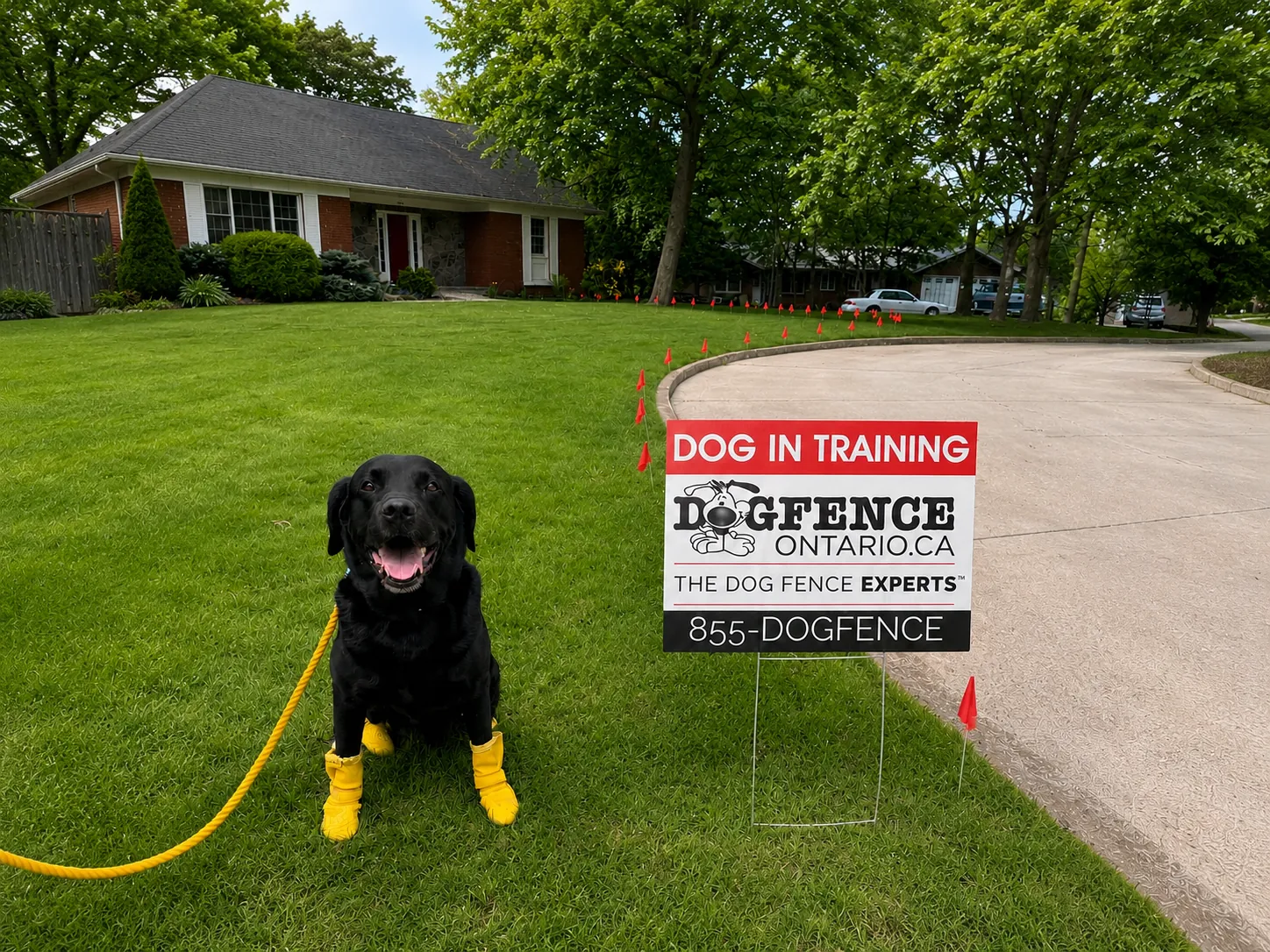
Flags go in along the boundary and we walk them with you and your dog. You keep a simple plan for the week, and our number.
Short daily sessions for about a week, starting with us on install day. Some dogs take ten days or more.
A calm first look at the flags. On day one the collar is set to beep only: your dog hears the beep and learns that stepping back makes it stop and earns a treat.
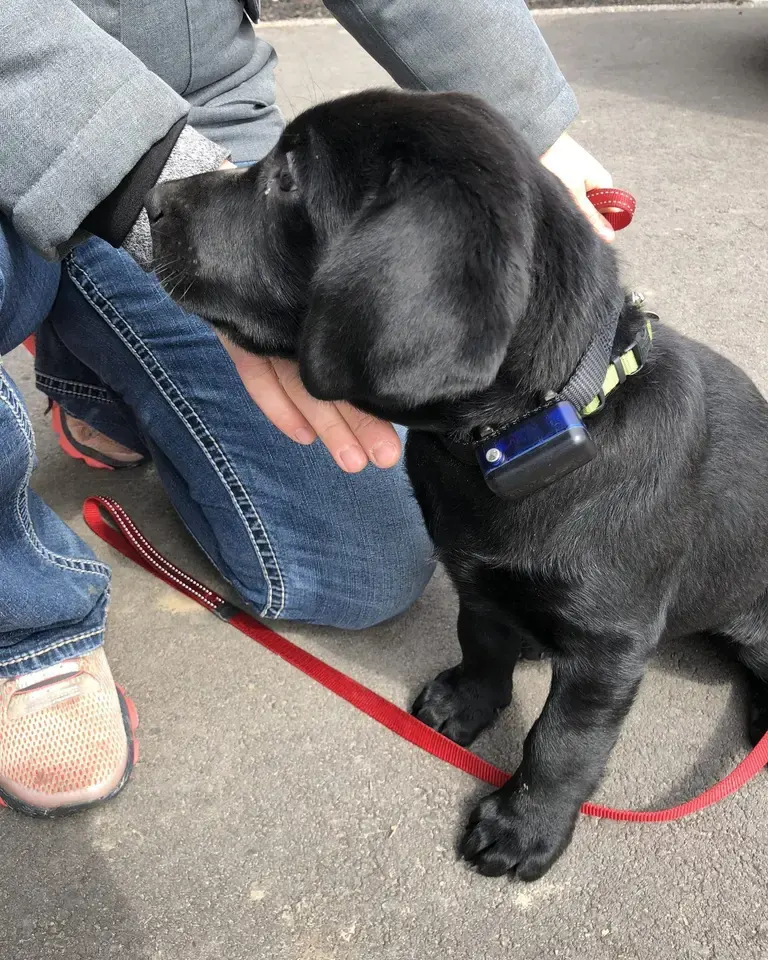
Your dog learns to leave the flags alone even when something interesting is on the other side.
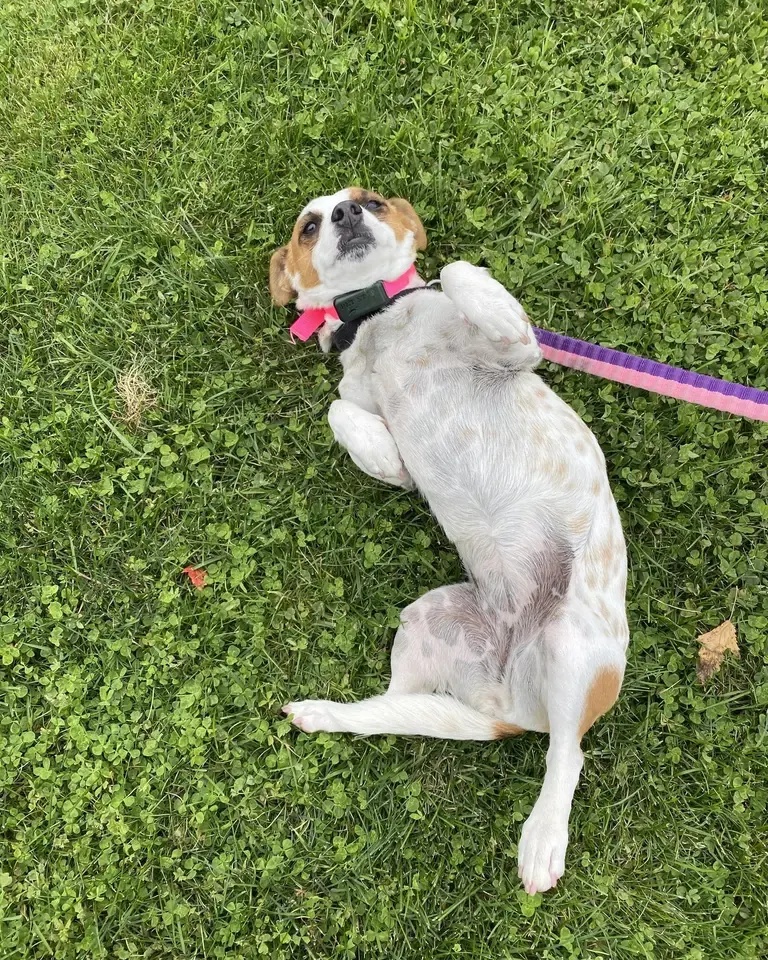
Real-world distractions, with less help from you. A long line trails on the ground so you can step in if you need to.
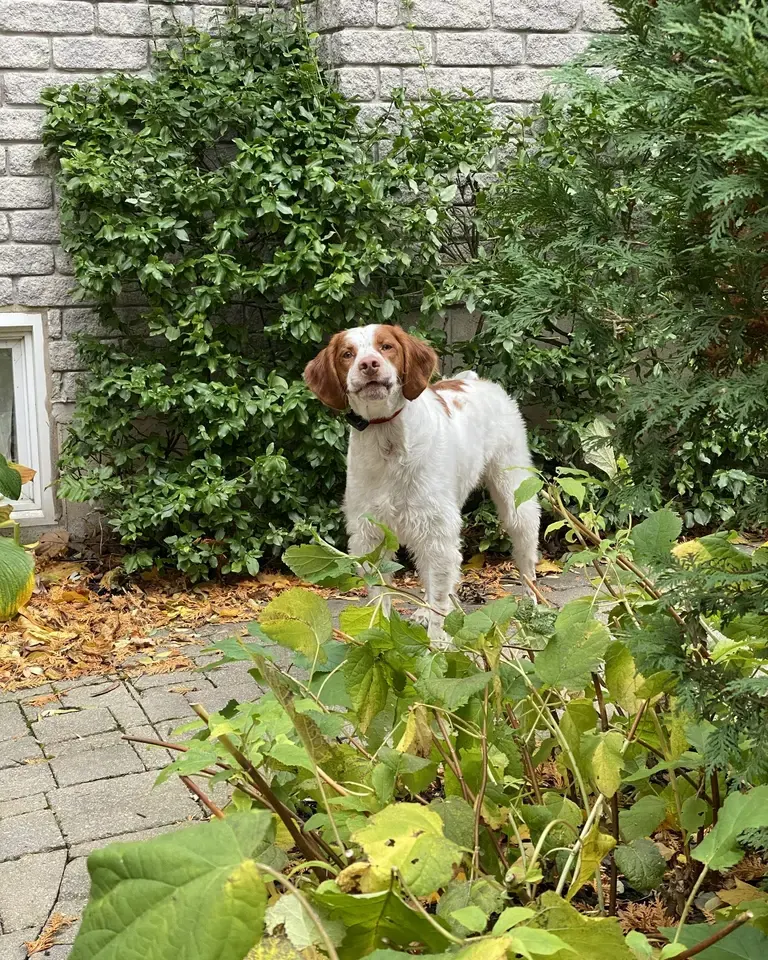
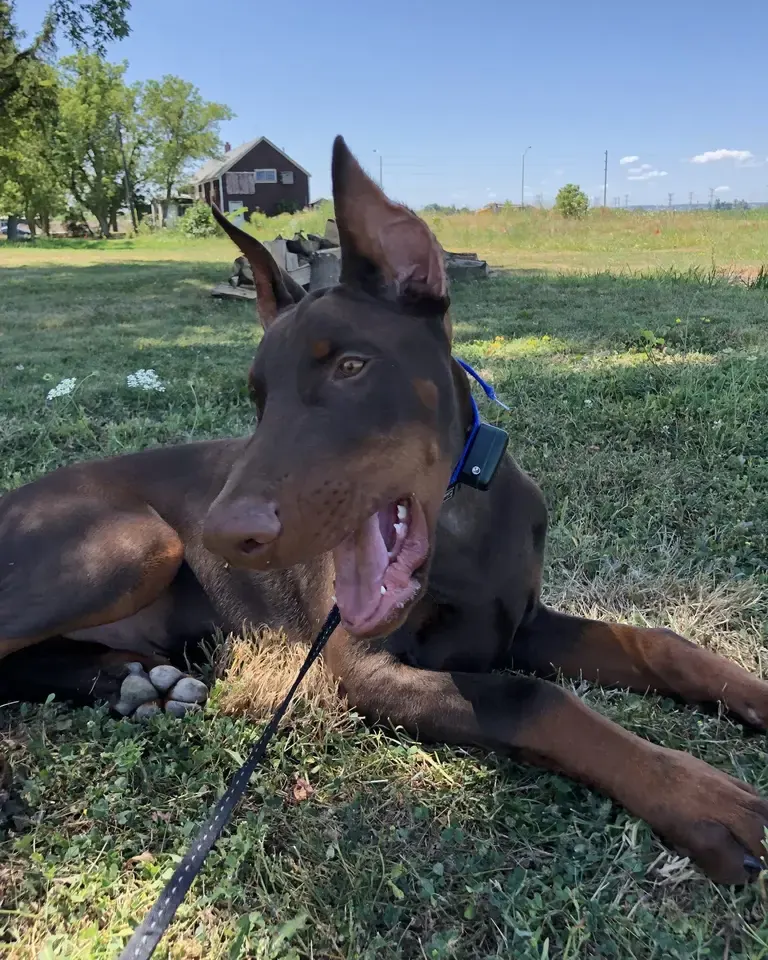
Normal life, no leash, with you watching closely. A dog that is ready glances at the flags and turns away on its own.
Done-for-you training is available. Ask us.
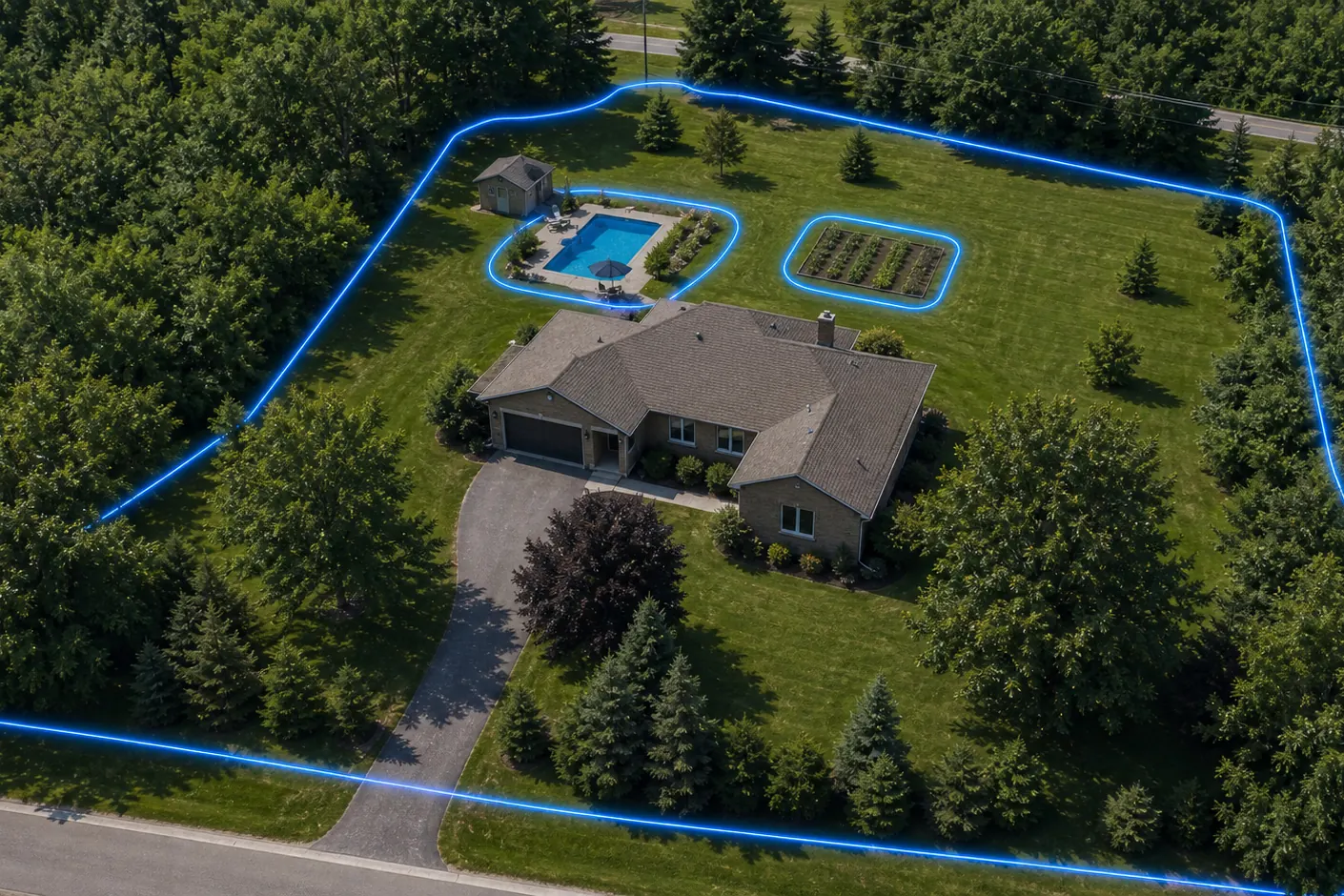
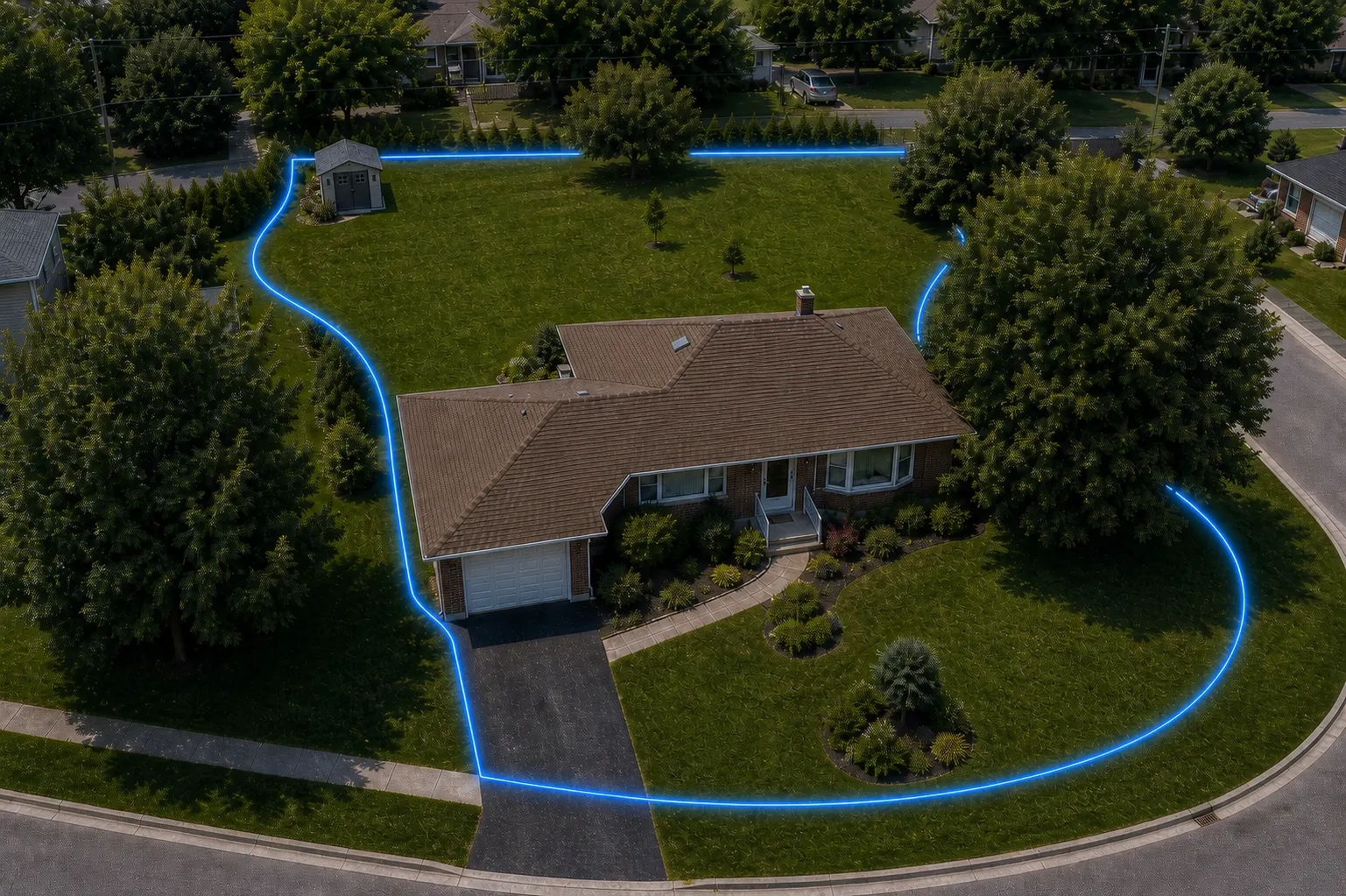
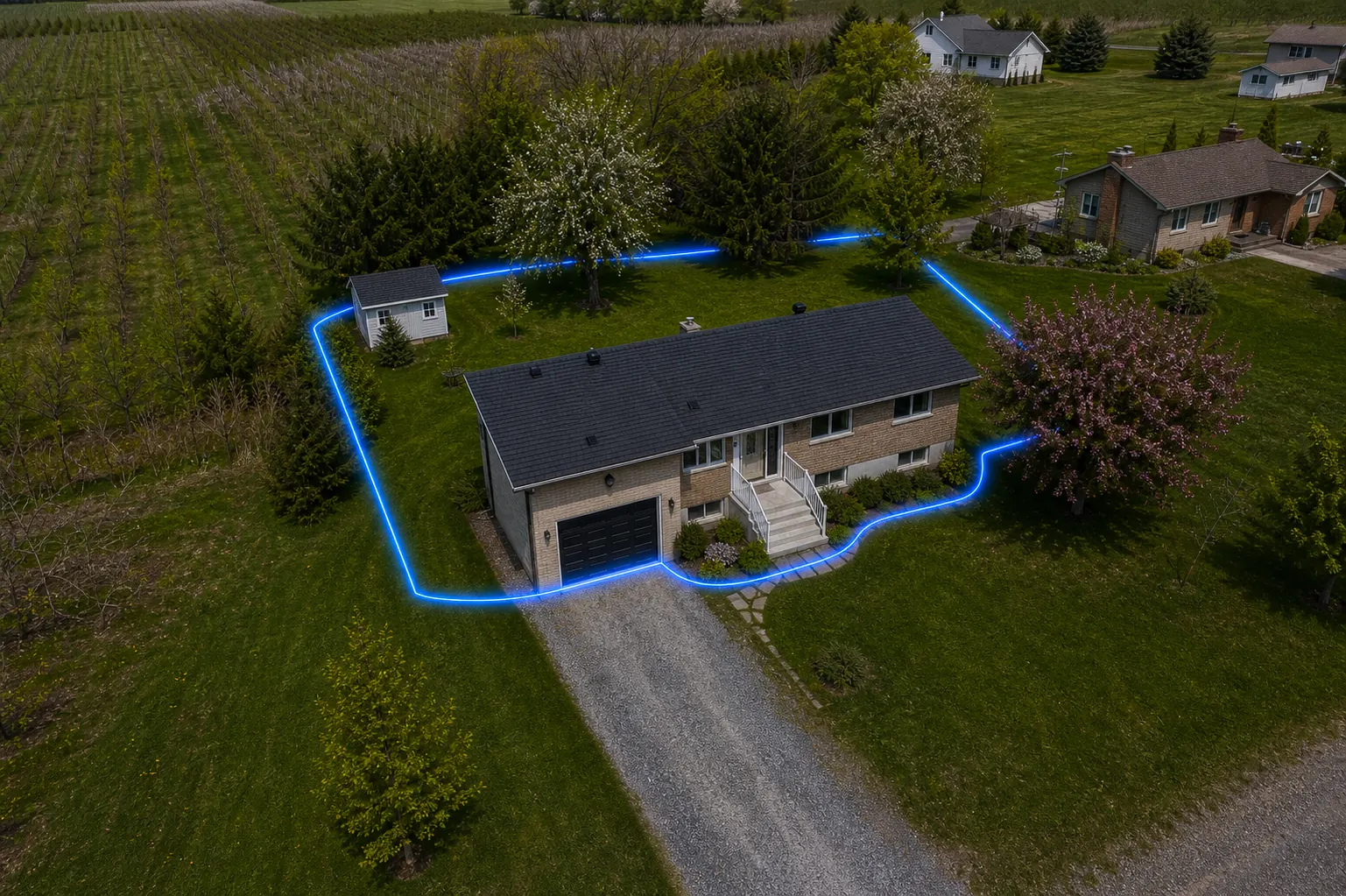
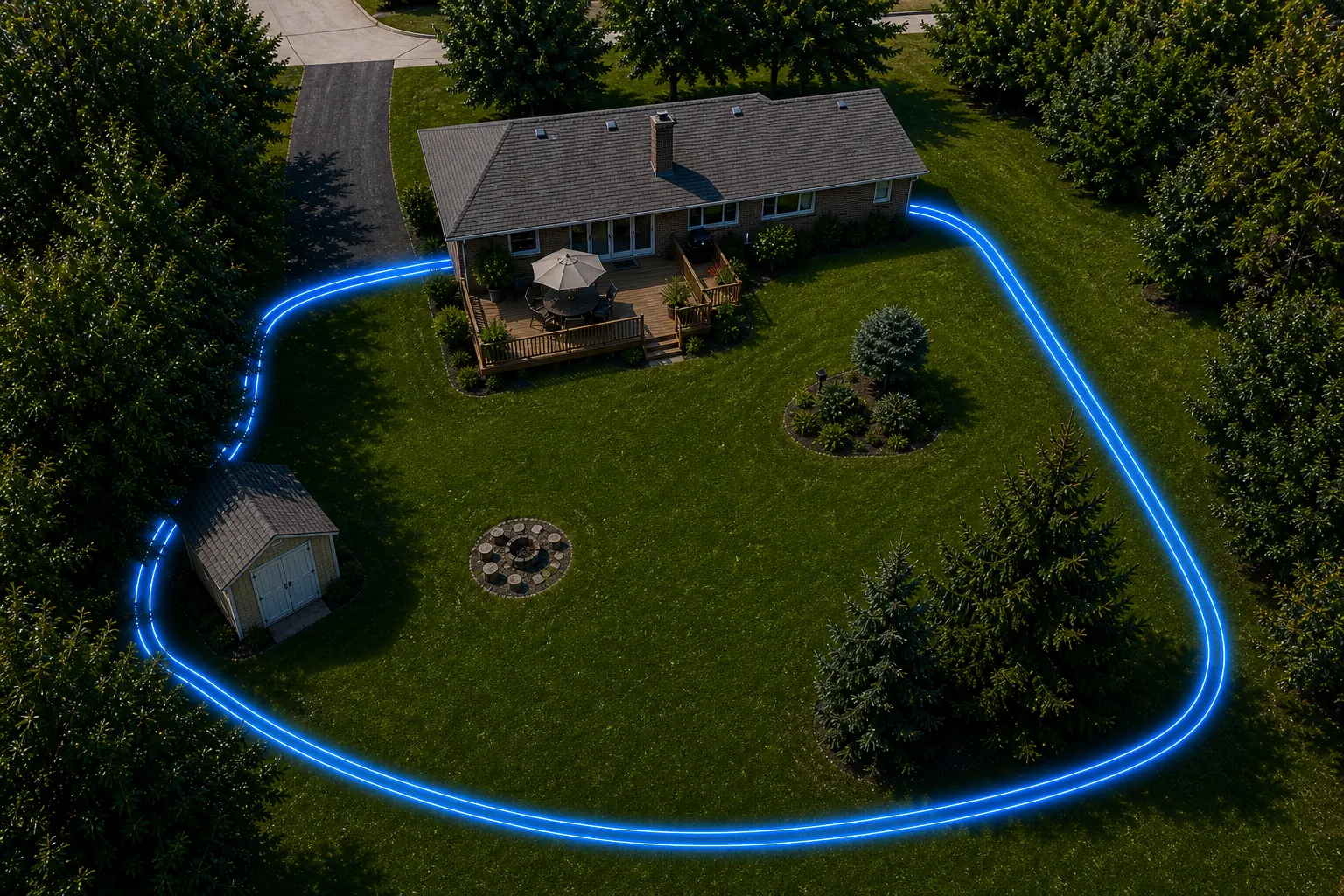
The wire goes wherever you want the boundary. Here are five popular layouts.
Best for: giving your dog the whole property, front and back. The most popular layout, on any lot shape.
Best for: full-yard freedom with a pool, garden or play area kept off limits by its own small loop.
Best for: separate front and back yards. The side yards are blocked, so your dog moves between them through the house.
Best for: busy streets and dogs that bolt out the front door. The wire runs tight along the front of the house.
Best for: a simple backyard zone that uses the house as part of the boundary.
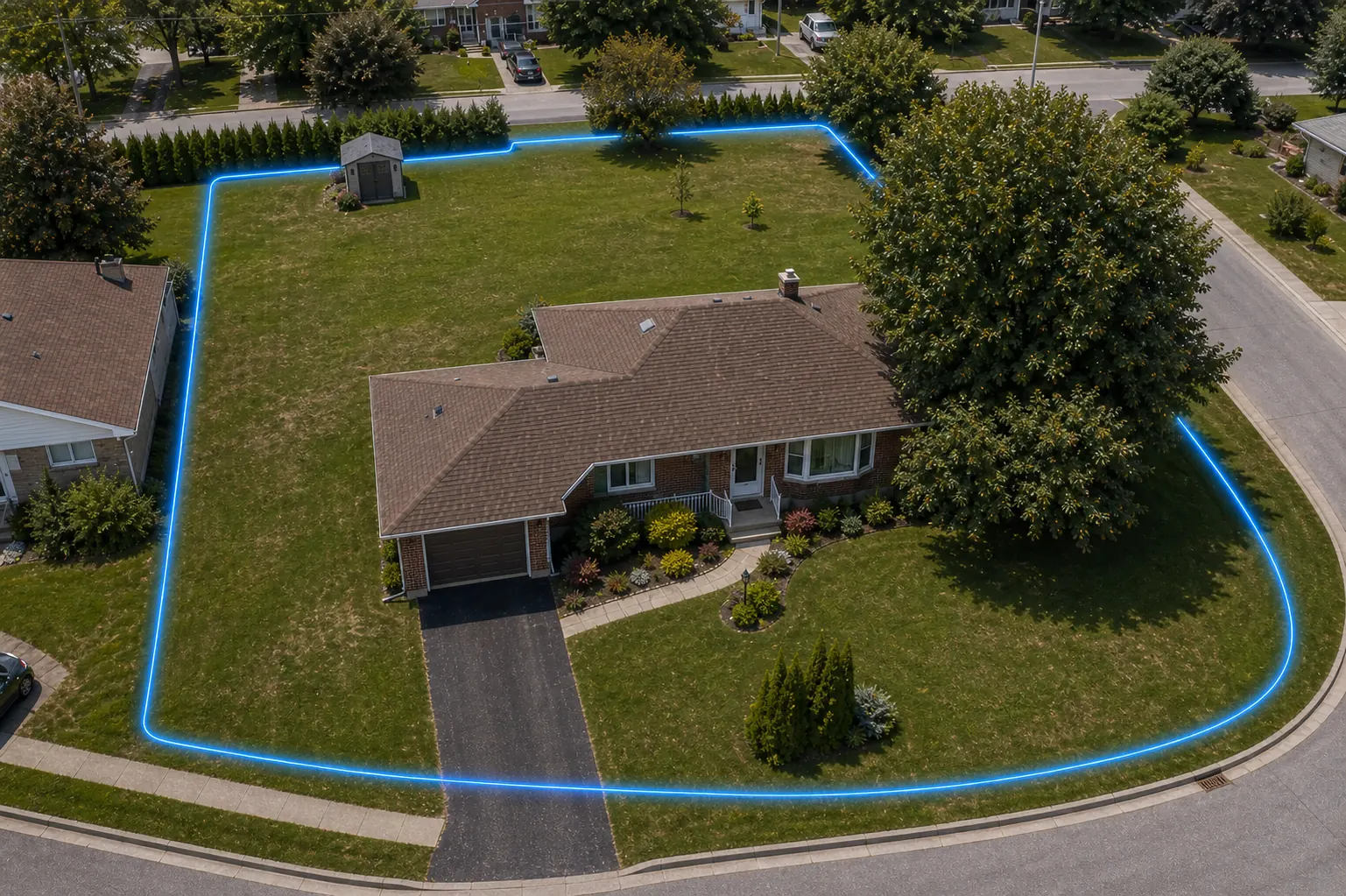
Example layouts. Yours is drawn to fit your lot.
We look at your lot on satellite and draw yours before we call.
Follow the training plan, tell us if your dog challenges the boundary, and give us a fair chance to adjust the settings. If we still can’t contain your dog in the first 12 months, we refund you.
It doesn’t cover a dog that isn’t wearing the collar, an open gate with no wire protecting it, or negligence unrelated to the equipment.
5 dogs in 16 years. That’s how many we couldn’t contain.
“We live in a semi rural area with no fences so this was a perfect solution. Our stubborn prey driven Airedale took a while to catch on but overall he respects the boundaries.”
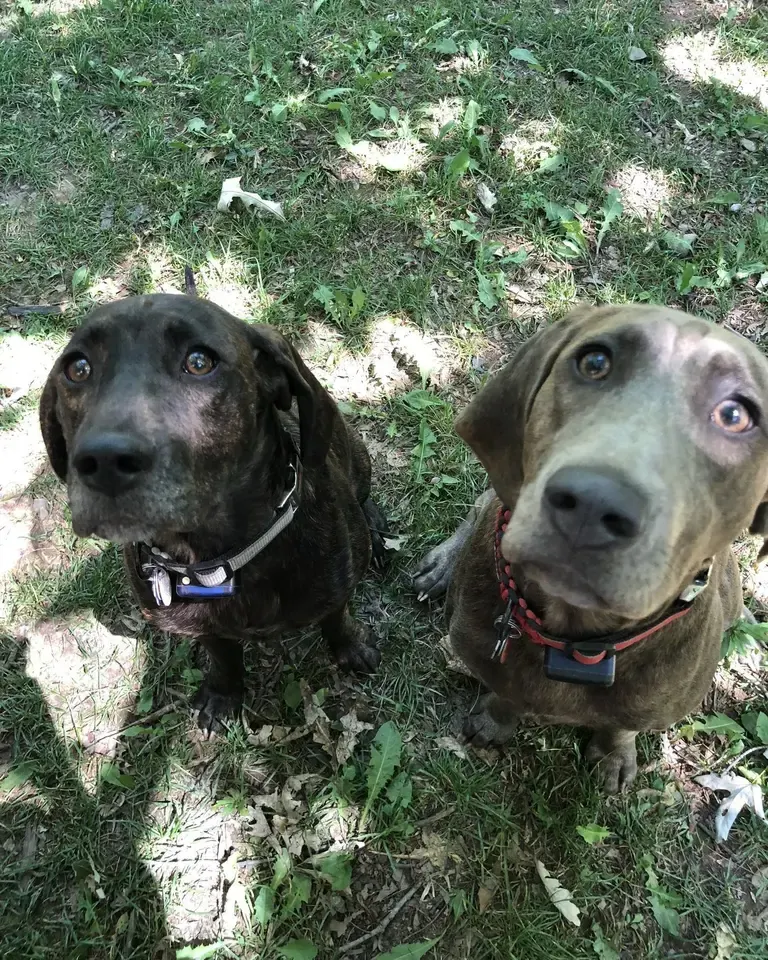
Not sure it suits your dog or your yard? Get a free quote or call (855) 364-3362. We’ll give you a straight answer.
Like the idea of an app? The LINK™ smart collar adds one. It is not GPS and does not track location. GPS and underground, compared
Already have a system in the ground? We find and repair wire breaks on any brand. Service and repair
Installed packages from $1,945 + HST
Most installations land between $1,800 and $3,500 + HST. You’ll have the exact number in writing before you decide.
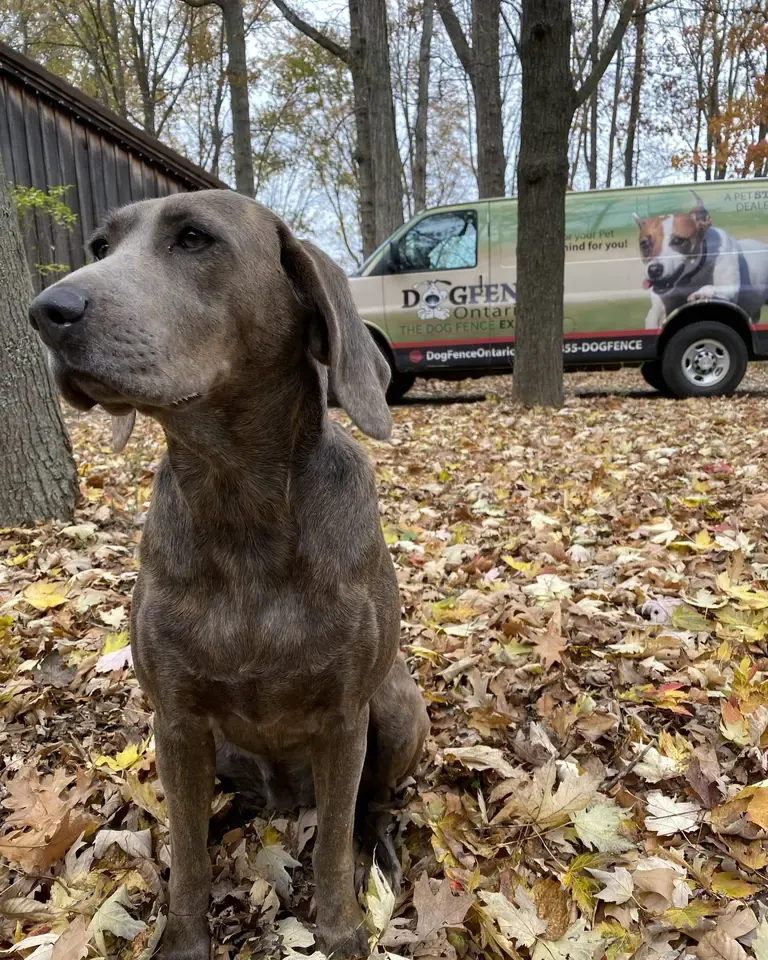
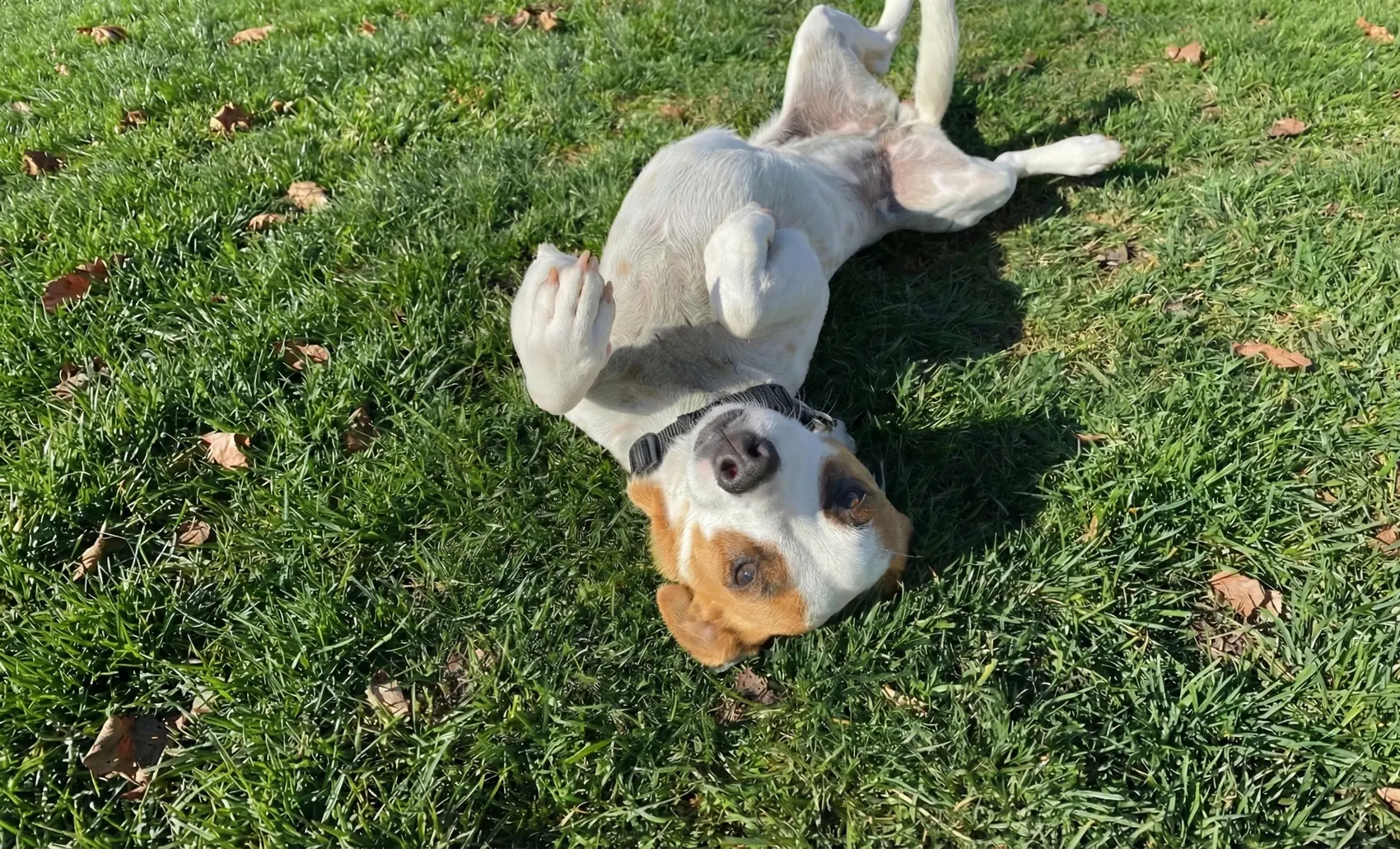
One system covers as many dogs as you have. Each dog wears its own receiver collar with its own settings, and each is trained on its own before they all go out together. An extra EcoLite collar is $495 + HST, or $745 + HST for a LINK smart collar.
Take the receiver collar off, clip on the leash and leave by the same spot every time. We show you this exit routine on install day, so your dog learns there is one clear exception to the boundary.
About once a month. A three-hour charge lasts about four weeks, and the collar flashes red when it is time. With the LINK smart collar, the app shows the battery level too.
Usually within a week or two. They are training aids, not permanent fixtures. Once your dog has passed the final test they come down gradually, so your dog moves from watching for the flags to listening for the beep.
Call or text us, even if it happens once. It is usually a small change to the settings: a higher level, or removing the half-second delay between the beep and the correction. There is no charge for adjusting settings. If we still can’t contain your dog in the first 12 months, the guarantee applies.
The buried wire typically lasts 30 years or more. Transmitters and collars last about 20 years with proper care, and both are covered by the 20-year UltraCare warranty. A replacement costs 20% of the item’s original price when you return the old one.
We’ll look at it on satellite and call you, usually within a few hours. No deposit, and no commitment until you approve the quote.
Prefer to talk? Call or text (855) 364-3362, 9 a.m. to 6 p.m., 7 days a week.