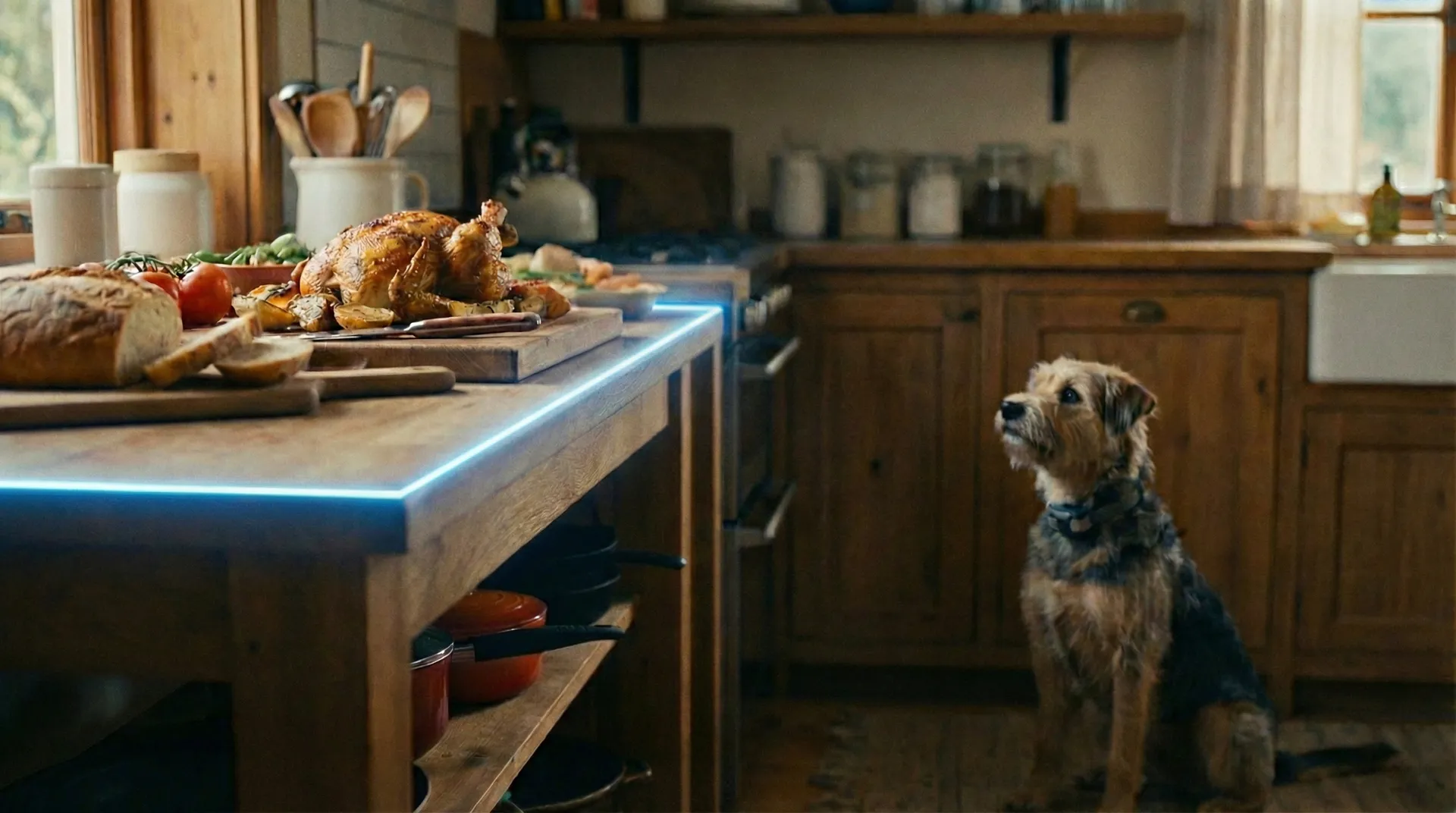
Indoor Dog Fence Solutions
Create pet-free zones inside your home, without baby gates or closed doors.
Two Types of Indoor Dog Fence Systems
Not sure if an indoor system will work for your layout? Here's how we set them up.
How Indoor Pet Containment Works
Same concept as outdoor containment, just applied to specific spots inside your home.
Choose the Area
Pick the room, doorway, or object you want to protect.
We Set the Boundary
Wireless bubble or wired line, matched to your space.
Dog Wears Collar
Same receiver collar used for outdoor containment.
Warning First
Audible tone alerts your dog when they approach.
Learns to Avoid
If ignored, gentle static correction teaches avoidance.
Is an Indoor System Right for You?
Indoor systems work well for certain situations, but they're not the answer for everything.
Best At
- Keeping dogs off furniture and counters
- Preventing trash raids and counter-surfing
- Creating calm "no-go" zones without shouting
- Keeping dogs out of nurseries or offices
- Stopping door-dashing patterns
- Giving cats dog-free spaces for food, sleep, or litter
Not the Right Tool When
- You need a guaranteed physical barrier for safety (e.g., bite risk)
- Your dog won't wear a collar consistently
- You want instant results with zero training
- The dog has severe anxiety or reactivity issues (talk to us first)
Important: "Keep-Out Zones" vs. Physical Barriers
Indoor containment teaches your dog to avoid certain areas, not to be physically blocked from them. It's a training tool that creates consistent boundaries. If you need a guaranteed physical barrier (for example, a dog with bite risk around visitors), you'll still want doors, gates, and supervision. Indoor containment works best when you want to end the constant "no!" and door-shuffling, not replace safety precautions.
Common Uses for Indoor Dog Fences
After hundreds of installations, these are the scenarios we see most often.
Baby Rooms & Nurseries
Keep pets from sneaking into the baby's room during nap time, without closing the door and losing airflow.
Doorways & Hallways
Create invisible "lines" at specific doorways so pets enjoy main living areas but stay out of certain rooms.
Litter & Utility Rooms
Protect litter boxes, garbage areas, laundry rooms, anywhere you don't want dogs exploring.
Counters & Kitchens
Stop counter-surfing and keep pets out of the kitchen during meal prep or when guests are over.
Furniture Protection
Keep dogs off specific couches, chairs, or beds while still letting them enjoy the rest of the room.
Cat-Only Safe Zones
Give cats access to certain areas while keeping dogs out, or vice versa. Peace for everyone.
Common Questions About Indoor Dog Fences
A lot of people don't realize pet containment systems can work indoors too. Here's what we hear most often.
"Is this just a shock collar?"
No. The system uses a progressive approach: first an audible warning tone, then, only if ignored, a gentle static correction. The correction level is adjustable and typically set low for indoor use. Most dogs learn to respond to the warning tone alone within a few days. You're welcome to feel it on your hand during installation. It's a surprise, not a pain.
"Will it work if my dog is really determined?"
The system is adjustable across multiple levels, and we calibrate it to match your dog's temperament. Training matters most. A dog that understands the boundary will respect it. If something isn't working, we support you through adjustments. We don't promise magic, but with proper setup and training, it works for the vast majority of dogs.
"Will it keep my dog physically locked in a room?"
Indoor containment is designed to teach avoidance. Your dog learns to stay away from certain areas. It can also be configured to limit access to specific rooms (keeping a dog in the living room, for example), but it's a training-based system, not a physical barrier. Dogs that have completed training reliably stay within boundaries.
"Is it safe?"
Yes. We use Pet Stop systems with GentleSteps™ training methodology, designed to be humane and low-stress. The static correction is brief, adjustable, and similar to static you'd feel touching a doorknob in winter. We guide you through training so your dog builds confidence, not fear.
We Don't Just Sell Equipment. We Teach Your Dog the Rules
Indoor containment only works if your dog understands it. That's why training and support come built into every installation.
What's Included with Every Indoor System
Training Rules to Follow
- No off-leash until training is complete. Follow the GentleSteps plan before giving your dog unsupervised access.
- Remove the collar daily. Don't leave it on 24/7. Give your dog's neck a break to prevent irritation.
- Contact us if your dog is ignoring the boundary. If they're sprinting through, we can remove the half-second delay and adjust settings.
What Does Indoor Containment Cost?
Most indoor units cost $225 per protected area when added to an outdoor system. Standalone indoor-only setups are also available.
Final pricing depends on how many areas you want to protect, whether you need wired or wireless solutions, and whether you're bundling with outdoor containment. Full package and add-on pricing is on our pricing page.
We'll give you a clear, all-inclusive quote before any work is done. No surprises.
Common Indoor Add-Ons
✓ Kitchen / counter zone
✓ Nursery or bedroom doorway
✓ Litter room (dog-free zone for cats)
✓ Furniture protection area
Most families bundle 1–2 indoor zones with their outdoor system for the best value.
Wondering If an Indoor System Makes Sense for Your Home?
We'll look at your floor plan, the areas you want to protect, and how your pets currently behave, then recommend a setup that fits your routine.
Talk to Us About Indoor ContainmentAlready have an outdoor system? Schedule a service visit to add indoor zones.